Child-Led, Youth-Driven: The HEDIPRO Story from Medan
This piece draws from conversations held as part of the ‘Learning Circle’ on Child-led Advocacy for Safe Schools that was jointly organised by Yayasan Pusat Kajian Dan Perlindungan Anak (PKPA), Voices of Children (Nepal), and Samya Development Resources Pvt. Ltd.
It started with one room, a handful of kids from different schools, and a single consultation session. Nobody planned for it to become a movement when the session ended. None of us wanted to leave.
So, we didn’t.
That’s how HEDIPRO was born.
HEDIPRO (Hero of Digital Protection) is a child and youth community from Medan, Indonesia, that is backed by the PKPA Foundation (Yayasan Pusat Kajian dan Perlindungan Anak). We are made up of two groups: a Child Group for ages 12–18, and a Youth Group for those 18 and above. But more than a structure, we are a community that shares one goal – that children and young people deserve to be safe online, and that we should be the ones leading that fight.
Recently, I had the chance to join a ‘Learning Circle’ on child-led advocacy, and it became one of the most meaningful experiences in my journey with HEDIPRO. The session was not just about sharing what we do, it was a space to exchange best practices, hear new perspectives, and grow. I shared how HEDIPRO runs its advocacy work, and in return I gained fresh insights from Sushma (Dahal), from other participants, and from a wider conversation about what meaningful child participation can and should look like.
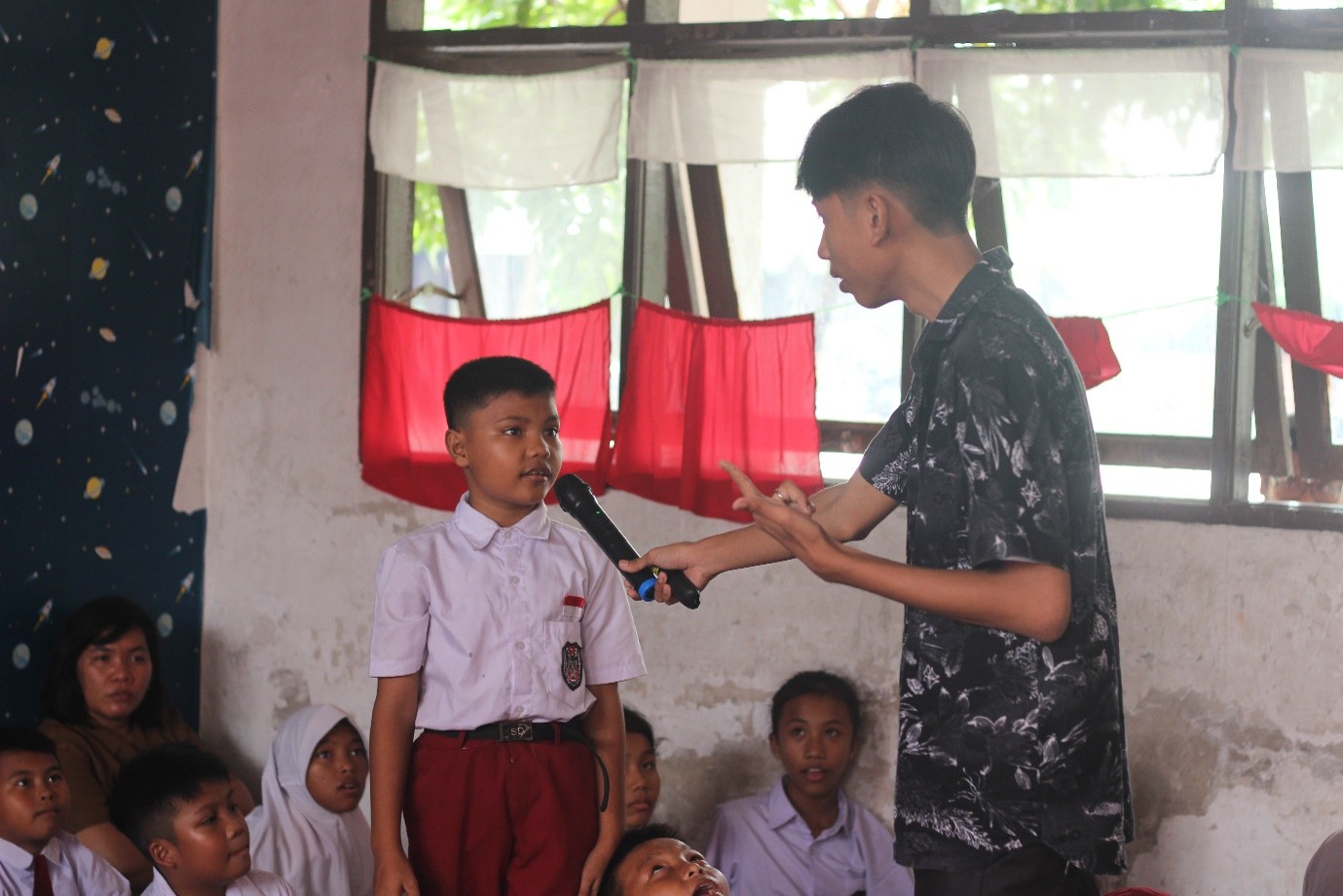
In the ‘Learning Circle’, I shared my own insights on child-led advocacy that when children are genuinely empowered to lead, they grow in confidence in expressing ideas and participating, develop a deeper understanding of child rights and advocacy issues, and expand their reach through meaningful connections and collaborations. I also spoke about the importance of intentional collaboration between children and adults, not as a hierarchy, but as a partnership, especially in the prevention and elimination of violence against children.
Sushma highlighted peer education as a powerful best practice that increases awareness and ensures that child participation is genuinely meaningful rather than symbolic. Participants discussed how involving children in schools at every stage of campaign and advocacy design – using creative, child-friendly co-design methods – is one of the most effective ways to create truly child-friendly schools.
We also agree that child participation works best when it is non-judgemental, inclusive, and driven by the children themselves.
And I can say that from experience.
Before HEDIPRO, I was the kid who thought his voice didn’t matter. I didn’t know my rights. I didn’t even know I had experienced violence because no one had ever taught me what that looked like. Joining this community didn’t just give me knowledge. It gave me language, courage, and a sense of purpose I didn’t know I was missing.
The work is far from done.
Schools need to take digital literacy and child rights seriously, not as electives, but as essentials. Adults and young people need to collaborate, not just coexist. And children need more than just seats at the table; we need to help build the table. Because child-led advocacy isn’t just good practice, it’s the only way forward.
Child participation didn’t just change what I did. It changed who I am.
Michael Jonathan is a member of HEDIPRO Medan, and a Child Protection Advocate.
If you’d like to get in touch with Coalition for Good Schools,
send us an email at in**@*********************ls.org
Copyright © 2025 | Coalition for Good Schools
If you’d like to get in touch with Coalition for Good Schools, send us an email at in**@*********************ls.org
SUB-SAHARAN AFRICA
HakiElimu
+255 22 2151852/3
ASIA
Samya
+91 11 41666101 06
LATIN AMERICA
Aulas en Paz
+57 310 8075818
Copyright © 2025 | Coalition for Good Schools