Coalition Gathers Civil Society Leaders in Jakarta, Indonesia
Global South civil society is often expected to implement, not to lead. In Jakarta, Indonesia, from 19-21 January, that assumption was challenged head-on as the Coalition for Good Schools convened our Annual Founders Gathering.
This was not a typical convening. It was a reset of how we lead the field.
Bringing together leaders from across Latin America, Sub-Saharan Africa, South Asia and our Global Hub, the Jakarta Gathering created space for something increasingly rare in our field: honest reflection, shared strategy, and collective vision-setting.
At a time of rapid change and growing complexity in education systems worldwide, our discussions centered on a critical question: What does leadership for preventing violence against children (VAC) in and through schools look like – and need to look like – in the Global South today?
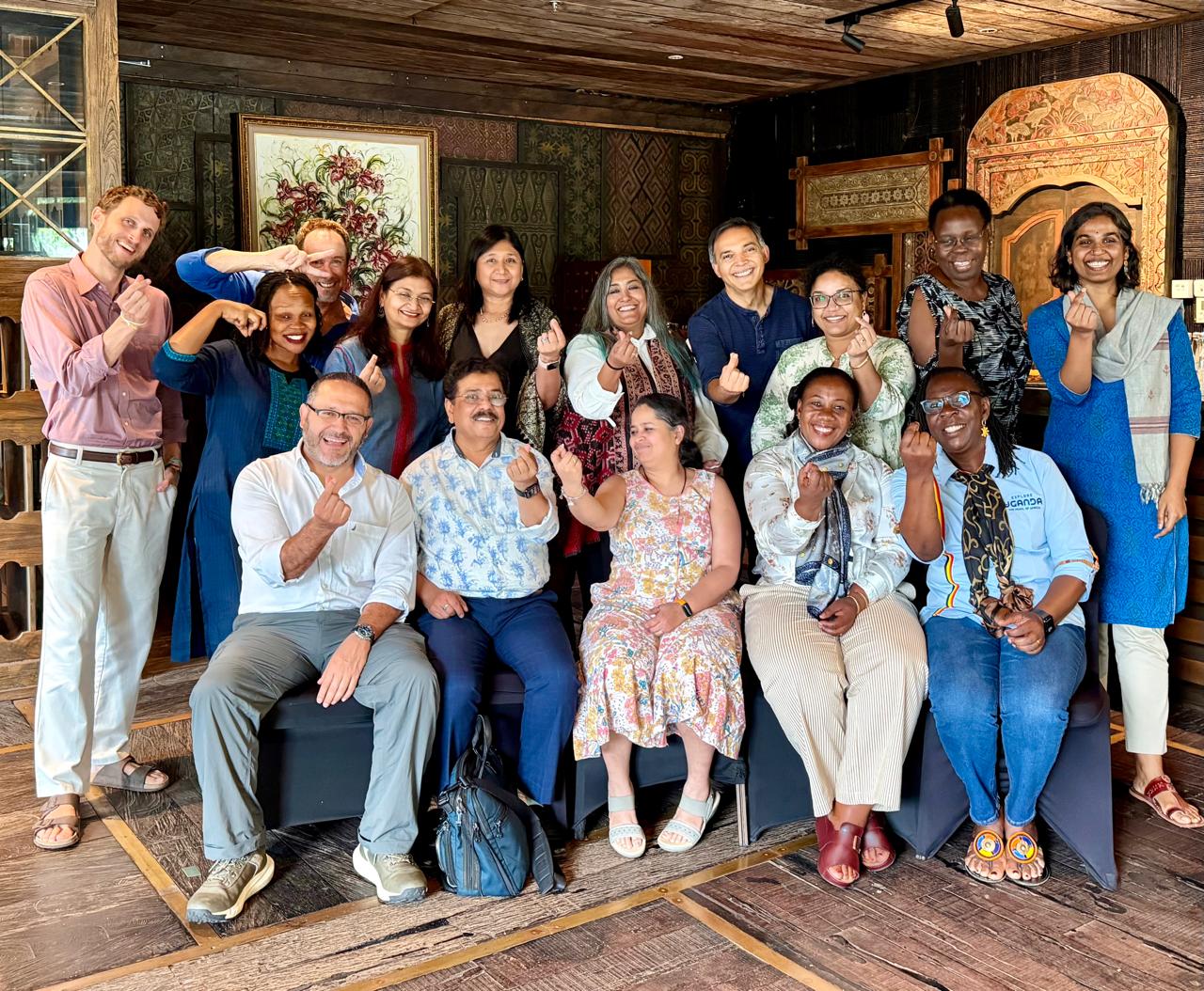
This Gathering reminded us that the Coalition for Good Schools is not simply a network of organizations. It is a collective of Global South civil society leaders uniquely positioned to shape the future of violence prevention in and through schools — if we choose to fully step into that role. As one co-founder reflected, the Jakarta gathering was “less about status updates and more about a radical reclamation of our leadership in the field.” This shift in mindset matters. Too often, civil society is positioned as implementers rather than agenda-setters. In Jakarta, we named this dynamic directly — and committed to changing it.
Civil society leadership in a challenging moment
Day one of our Gathering created space for something many convenings avoid: confronting the reality of civil society leadership today. Participants spoke candidly about burnout, the strain of navigating rapid change, and the weight of leading in a regressive political climate. Across contexts, similar dynamics are emerging — rising trauma, deepening inequality, increasing misogyny — all of which shape both schools and the highly influential systems around them.
As one participant described it, leadership in this moment can feel like a “hero’s journey”, requiring courage to navigate uncertainty, while also knowing when and how to pass the torch to a new generation. A clear takeaway emerged: the future of this field depends on shared leadership, mentorship, and collective resilience — not just individual endurance.
Our focus soon shifted from reflection to vision and innovation. Founders explored how the broader field is evolving — and where it is falling short. While our core mission remains unchanged, the context in which we all lead prevention work is shifting rapidly, requiring new approaches and stronger collective positioning. Key gaps identified are not new, but feel more pressing than ever. These included:
- Limited coordination and alignment across actors, and across seemingly separate sub-movements and fields
- Insufficient visibility of effective practice, particularly from the Global South
- A need for clearer civil society positions on emerging issues
- Underrepresentation of Global South leadership in global decision-making
Emerging challenges such as the role of artificial intelligence were also front and center of our discussions. Participants described A.I. as a “double-edged sword” — with real potential to support children’s learning, safety and agency, but also serious risks related to bias, ethics, and the erosion of critical thinking if left unchecked. The future of A.I. and how it will impact an emerging pipeline of leadership across the VAC prevention field remains unclear, but we affirmed our commitment to deepen our understanding and position on how we will collectively confront these seizmic shifts.
The Gathering reaffirmed that the Coalition’s Regional Hubs are not simply implementing global agendas — they are shaping them.
-
Latin America Hub is advancing work that bridges policy and practice on social emotional learning, mental health and violence prevention more broadly, with a strong focus on teacher wellbeing and strengthening regional knowledge systems.
-
Africa Hub is building vibrant communities of practice grounded in mentorship, connection, and locally rooted innovation, and is increasingly driving the conversation on VAC prevention in schools across the region.
-
Asia Hub is driving deeply embedding members’ work on gender norms into violence prevention dialogues, and is preparing to lead global communication through a shared 2026 campaign.
-
The Global Hub continues to support this work while preparing to make big moves in developing a pipeline of leadership through our upcoming Leadership Cohort, knowledge translation through a 2026 brief series, and the design and piloting of a foundational intervention for schools.
Reframing the role of civil society
One of the most direct and powerful conversations in Jakarta centered on how Global South civil society is positioned within the broader international system. As one co-founder put it, for too long civil society has been treated as the “foot soldiers” of the field — developing and implementing innovative approaches that are later absorbed and amplified by others, often without recognition or equitable resourcing. This sparked a clear and collective response:
We are changing the game.
-
We are defining our own agenda — not operating within frameworks we did not shape, but acting as “meaning-makers” in the field.
-
We are challenging gatekeepers — from resource mobilisation to global policy spaces — and demanding a seat at the plenary table, not just side events.
-
We are leading with vibrancy — drawing strength from diverse regional leadership and refusing to cede space.
While we also discussed the limitations and shortcomings of civil society, particularly in terms of collective action, this reframing is not rhetorical — it is a call to action for all civil society members and will shape how the Coalition shows up globally in the years ahead.
The Second Ministerial Conference to End Violence Against Children in Manila in November 2026 was identified as a critical milestone. Participants were clear: this is not a moment to be peripheral. It is a moment to show up as a coordinated, visible, and influential civil society collective — shaping the agenda, not responding to it.
“The road to Manila starts now,” one participant reflected, “and we are moving beyond survival mode to shape a global partnership that is vibrant, connected, and unapologetically led by the Global South.”
The Path Forward
The Jakarta Gathering concluded with a shared commitment to action. Key priorities for the coming year include:
-
Strengthening our collective voice: Expanding communications capacity to better articulate our leadership and impact.
-
Developing a foundational intervention for schools: Advancing a shared approach to VAC prevention while fostering emerging leadership.
-
Building an onramp for civil society for Manila 2026: Building consensus, increasing visibility, and shaping civil society engagement in global spaces.
-
Translating knowledge into action: Producing collaborative practice and evidence briefs across Regional Hubs.
-
Deepening collective learning: Hosting Learning Circles on emerging issues including AI, climate change, and teacher mental health and wellbeing.
-
Mobilizing targeted working groups: Activating time-bound, member-led groups to drive priority areas forward.
Conclusion
The Jakarta gathering marked an inflection point. It reinforced that the Coalition’s strength lies not just in its membership, but in its willingness to act collectively — to share leadership, challenge systems, and define a future where Global South civil society is not only included, but leading.
And it served as a reminder of something fundamental: What each of us does matters — because we remain closest to the schools and communities we serve, and accountable to them.
The question is no longer whether Global South civil society will be included—
but how we will use our leadership to propel the field forward.

If you’d like to get in touch with Coalition for Good Schools,
send us an email at in**@*********************ls.org
Copyright © 2025 | Coalition for Good Schools
If you’d like to get in touch with Coalition for Good Schools, send us an email at in**@*********************ls.org
SUB-SAHARAN AFRICA
HakiElimu
+255 22 2151852/3
ASIA
Samya
+91 11 41666101 06
LATIN AMERICA
Aulas en Paz
+57 310 8075818
Copyright © 2025 | Coalition for Good Schools
